 (309) 275 2314
 info@jtslawncare.biz
Landscape Curbing in Bloomington, Normal & Le Roy, IL
SUMMARY
At JT’s Lawn Care & Landscaping LLC, we install landscape curbing to give lawns and planting areas a cleaner, more intentional boundary. Our approach starts with the property itself: the shape of the beds, nearby walks and driveways, changes in grade, surrounding landscape materials, and the way the yard is maintained. The goal is custom concrete curbing that looks integrated with the landscape and gives the finished property stronger definition.
What Landscape Curbing Adds to a Property
Landscape curbing works best when the line has a purpose. It can define planting beds, separate lawn from mulch or decorative rock, frame an entry landscape, or create a cleaner transition near a walk or driveway. A continuous border also gives the eye a consistent edge, which can make an existing landscape feel more organized without requiring a full redesign.
Define Lawn and Planting Areas More Clearly
We do not treat curbing as a decorative strip added at the end. The route, proportions, and relationship to the surrounding yard matter. A curve that is too tight can make a bed feel cramped, while a line that ignores mowing patterns or nearby pavement can create unnecessary maintenance.
Landscape curbing can improve the way a property functions as well as how it looks. A defined border helps keep lawn and planting areas visually separate and can help contain mulch, decorative rock, or other bed materials within the intended area. It also creates a consistent reference point for future landscape maintenance.
The benefit is not that curbing eliminates upkeep. Lawns still grow, beds still need care, and landscape materials may need occasional attention. The advantage is clearer organization: the yard has an established boundary instead of relying on an edge that must be recreated every season.
Plan the Line to Fit the Property
A good curbing layout should support the home and landscape, not compete with them. We look at the length of the run, the depth and shape of the planting bed, where the line begins and ends, and how the curb meets existing surfaces.
That planning becomes especially important around front entries, house corners, long side beds, and areas where several materials come together. The finished line should feel deliberate from multiple viewpoints, not just from one spot in the yard.
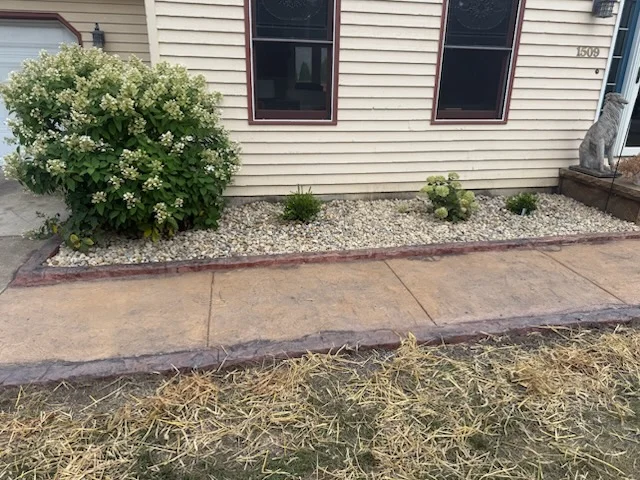
Our Landscape Curbing Approach
Our landscape curbing process begins with understanding what the border needs to accomplish. We review the proposed route, adjacent landscaping, access, grade, and nearby fixed features before finalizing the line.
Prepare the Route Before Installation
Preparation matters because the finished curb depends on what happens before the visible surface is complete. We establish the route, prepare the installation area, and account for surrounding elevations so the curb fits the property rather than sitting awkwardly against the lawn or bed.
Existing walks, driveways, downspouts, utility areas, and mature plants can all influence that route. Identifying those conditions early gives us a clearer basis for shaping the border around the property.
Finish Transitions Cleanly
Once the curb is installed, we focus on consistent lines, smooth transitions, and a clean finished appearance. We also look at how the completed edge meets nearby landscape material and existing features.
Those transition points matter. Where a curb approaches a sidewalk, driveway, established bed, or another fixed feature, the end of the run should feel intentional rather than abrupt. Clean finished details help the curbing read as part of the landscape instead of a separate addition.
Coordinate Curbing With the Rest of the Landscape
Landscape curbing is often one part of a larger outdoor improvement. Coordinating it with changes happening elsewhere on the property helps prevent a permanent border from being placed around a layout that is still evolving.
Set Curbing After Major Layout Decisions
If a planting bed is being reshaped, establish the new bed line before setting the final curb location. If grading, drainage, or a hardscape change affects the same area, those conditions may need attention before setting the final curb location.
For properties receiving broader landscaping, we can coordinate planting areas, mulch, sod, and other confirmed improvements with the new border. When patios, retaining walls, fire pit features, or other built elements are part of the project, our hardscaping services can address those features as their own scope while keeping the transitions between them clear.
Avoid Awkward Edges and Tight Areas
Because curbing is highly visible, small layout decisions can have a large effect on the finished result. We prefer lines that suit the property’s scale, leave reasonable room for plant growth, and avoid creating narrow or awkward lawn areas.
We also consider where landscape material will sit against the curb and whether the proposed edge supports the way the area will be maintained. Property-specific recommendations help us avoid treating every yard like the same template.
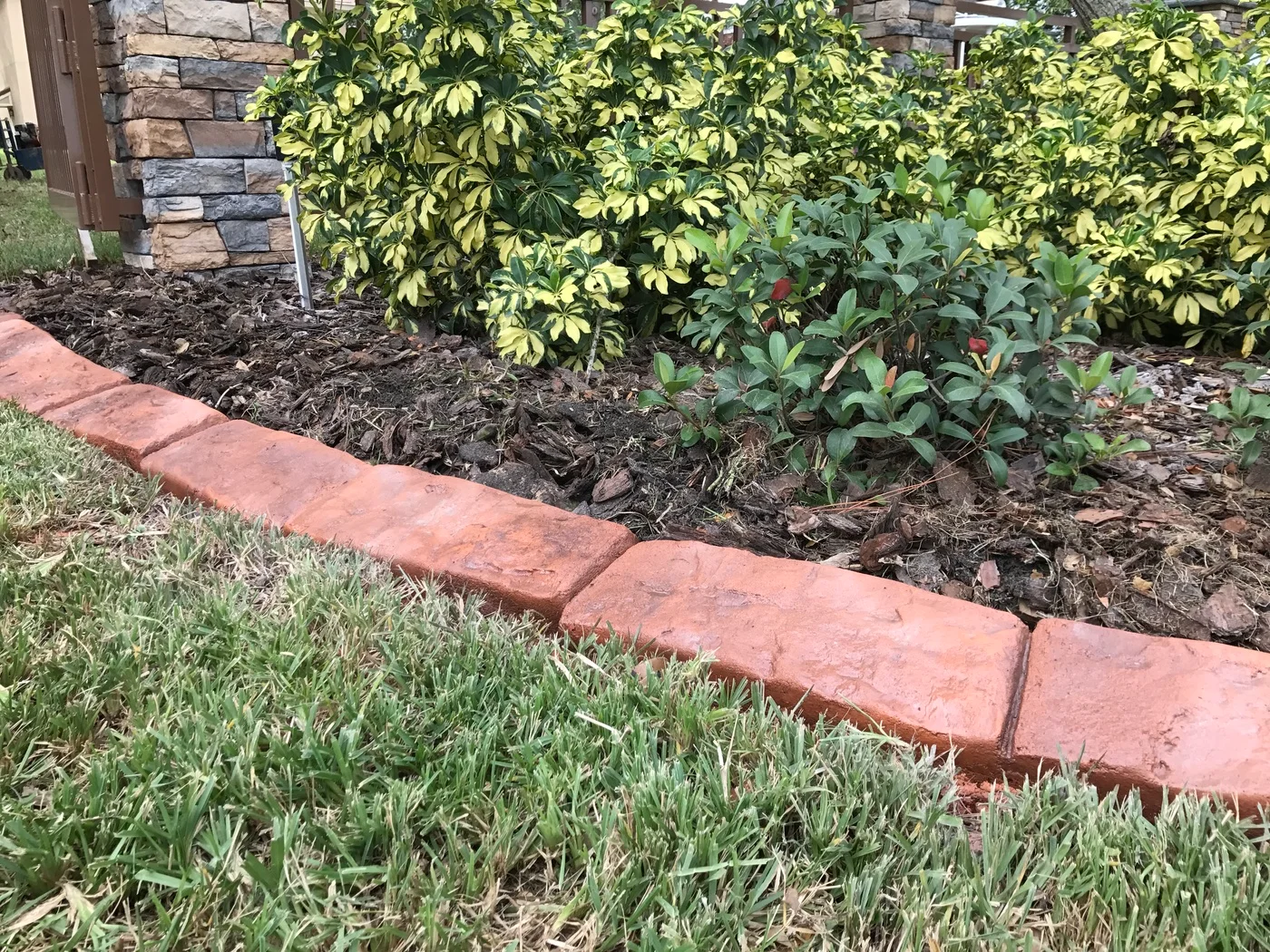
Why Choose Our Team for Landscape Curbing
We approach landscape curbing with the same priorities we bring to larger outdoor projects: thoughtful planning, site preparation, craftsmanship, and clean finished details. The goal isn’t simply to install more concrete. It is to create a border that improves how the landscape reads and functions within the property.
Our recommendations start with the actual space, not a preset shape. A long front bed may need a different approach than a compact entry area or a landscape that wraps around the side of a home. Looking at those differences helps us establish a line that fits the property.
Homeowners can explore our work and service coverage in Bloomington, Normal, and Le Roy. Each property is different, so the right curb line depends on the existing landscape and the result you want.
Conclusion
If your lawn and planting areas need a clearer, more permanent boundary, landscape curbing can be a focused way to improve the property’s structure and finish. Contact our team to discuss the areas you want to define and how custom concrete curbing can fit the rest of your landscape.
FAQ’s
These questions address common planning decisions for homeowners considering landscape curbing.
What Is Landscape Curbing?
Landscape curbing is a continuous concrete border that defines spaces such as planting beds, lawn edges, and other landscape transitions. It gives the property a fixed edge instead of relying only on a hand-cut bed line.
Where Does Landscape Curbing Work Best?
A good location starts with the area you want to define. Bed shape, lawn width, nearby pavement, mature plants, grade, and access can all affect where the line should run. We review those conditions before finalizing the layout.
How Can Landscape Curbing Fit an Existing Yard Without a Full Redesign?
You can install curbing as a focused improvement when the existing landscape already works. If the bed shape, grade, or adjacent hardscape is changing, it generally makes more sense to coordinate those changes first so the new curb follows the final layout.
Does Landscape Curbing Eliminate Bed and Lawn Maintenance?
No. Landscape curbing creates a defined boundary that can make bed lines easier to understand and help keep landscape materials organized. Lawn, plants, and bed materials still require normal care over time.
How Do You Plan Curbing Around Existing Walks and Driveways?
We consider how the curb meets existing walks, drives, lawn, and planting areas before installation. The goal is a deliberate transition that avoids awkward gaps or tight maintenance areas at the ends of the run.

"*" indicates required fields
★★★★★
Super personable, affordable, and attention to quality work. Thanks, JT’s!
- Amy Shreves
Young guys were friendly and did a great job for us. I would recommend their services to anyone needing landscaping or lawn care.
- Starkey Hedger
Scott was amazing! He was extremely helpful, kind, and professional. He walked us through every step of what needed to be done. He was very knowledgeable and went above and beyond. The crew came out and were fast, efficient, and very kind. We will continue to use them!
- Jennifer Garcia
These guys are awesome!
- Jared Hobson
We had the landscape curbing done around our pool and love it. Jake and his crew did a fantastic job.
-Traci Hartwig
SERVICES
Landscape Curbing
Landscaping
Pavers
Hardscaping
Retaining Walls
Patios
Sod Installation
Drainage
Retaining Walls
Softscape
Lawn Fertilization
Aeration
Landscape Installation
Mulching
Outdoor Living Spaces
Snow Removal
French Drains
Land clearing
Fall cleanup
Grading
Resloping
Planting
Tree Trimming
Tree Pruning
Erosion Control
Firepit Features
SERVICE AREAS
Bloomington, IL
Normal, IL
Le Roy, IL
Peoria, IL
Downs, IL
Mahomet, IL
Champaign, IL
Fisher, IL
Urbana, IL
Clinton, IL
Gibson City, IL
Maroa, IL
Monticello, IL
Forsyth, IL
Rantoul, IL
Savoy, IL
Lincoln, IL
Decatur, IL
Pontiac, IL
Morton, IL
