(309) 275 2314
 info@jtslawncare.biz

SUMMARY
At JT’s Lawn Care & Landscaping LLC, we install sod for homeowners who need to replace bare, badly damaged, or unfinished lawn areas with a more complete turf surface. We plan the work around the area’s condition, visible grade and water movement, access, surrounding hardscape and landscape edges, and what the new lawn needs to connect with. Sod can create a finished look quickly, but the final quality still depends on preparation below the turf and care during establishment.
When Sod Makes More Sense Than Trying to Recover Existing Turf
Not every struggling lawn needs replacement. Some properties still have enough usable turf for targeted care, while others have large failed areas, exposed soil, construction disturbance, or transitions that are easier to rebuild than repeatedly patch.
Replace Failed Areas With a Clear, Practical Boundary
We start by looking at the area that needs to change and how it meets the turf that is staying. A full front yard, a backyard section, or a focused repair can each require a different boundary. Walkways, driveways, planting beds, fences, trees, and existing lawn lines all affect where the new sod should begin and end.
When sod is one part of a broader yard improvement, our landscaping services can address planting beds, mulch, softscape, or other confirmed changes separately. Keeping those scopes clear helps the new lawn connect to the rest of the property without turning a turf-replacement project into an undefined landscape package.
Separate Turf Replacement From Turf Health Services
Sod replaces turf; it does not correct every reason a lawn struggled in the first place. If the existing grass is still usable and the main concern is compaction or nutrient support, our lawn care service may be the better place to start. If the problem is recurring grass height and appearance, that belongs with mowing rather than replacement.
Large bare sections, severely damaged turf, or areas being rebuilt after other property work can point in a different direction. The decision should follow the lawn and site condition, not the assumption that every thin area needs new sod.
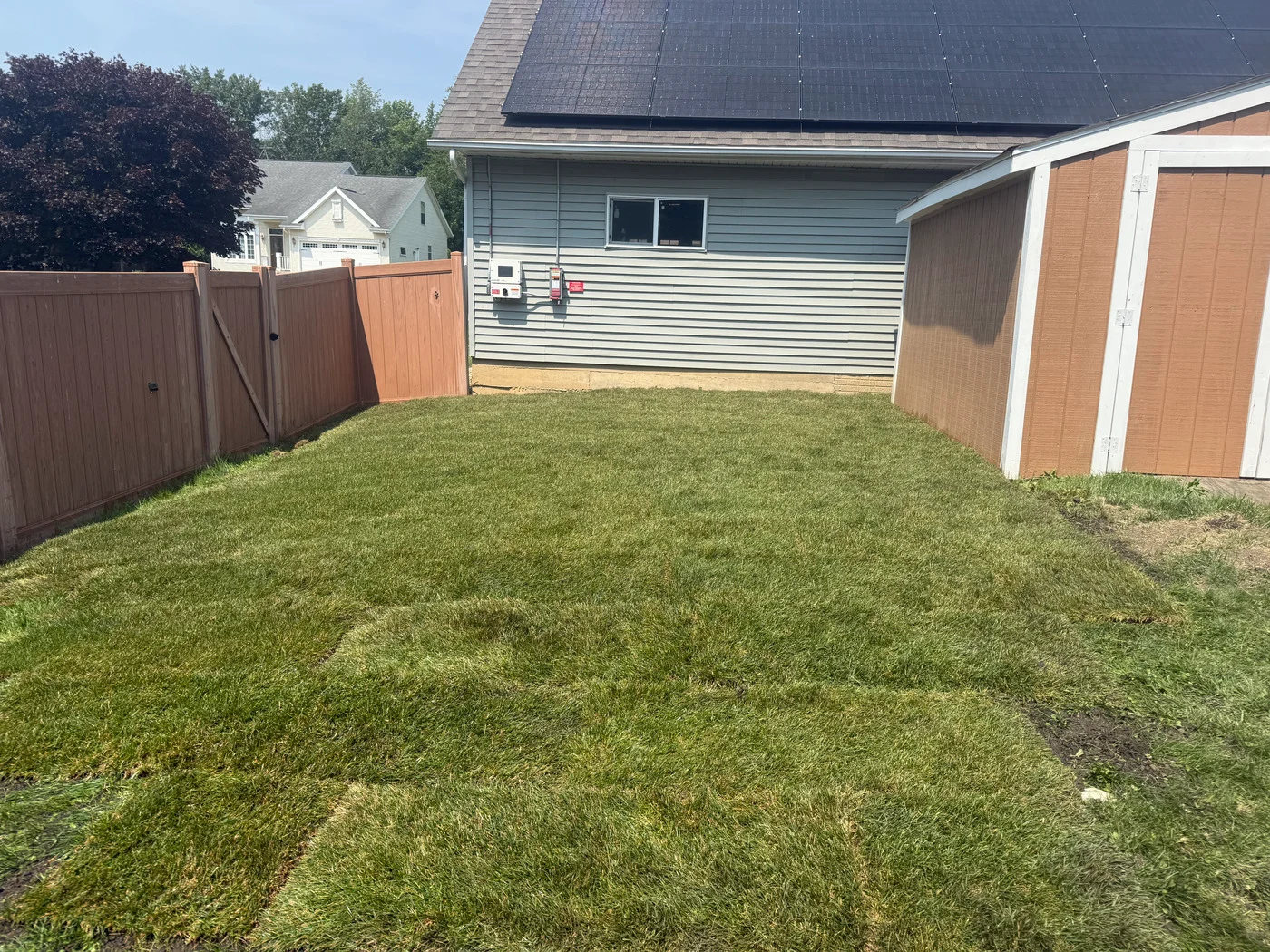
Prepare the Site Before the Sod Goes Down
Fresh turf needs consistent contact with a prepared surface. Covering uneven ground, active runoff, or a poorly defined transition can leave the new lawn starting with the same problem.
Account for Grade, Water Movement, and Surface Conditions
We review the installation area, visible low spots, slope changes, access, and how water appears to move across the proposed lawn. If grading, resloping, drainage, or erosion work is part of the confirmed project, we should handle that need as a site condition rather than hide it beneath the sod.
Preparation depends on the property. The goal is a smooth, workable surface that supports even placement and fits the surrounding elevations. We avoid presenting one excavation depth, one soil amendment, or one drainage detail as the answer for every yard because those decisions depend on the actual site and approved scope.
Plan Clean Edges Around Walks, Beds, and Hardscape
The lawn has to meet something at every edge. Sidewalks, driveways, patios, curbing, planting beds, fences, and existing turf can all affect how the final surface is finished.
We plan those transitions so the new sod does not sit awkwardly against pavement or leave narrow strips that are difficult to maintain. Curves and corners also need a clear finish. Good edge planning supports a cleaner appearance on installation day and makes the lawn easier to work around later.
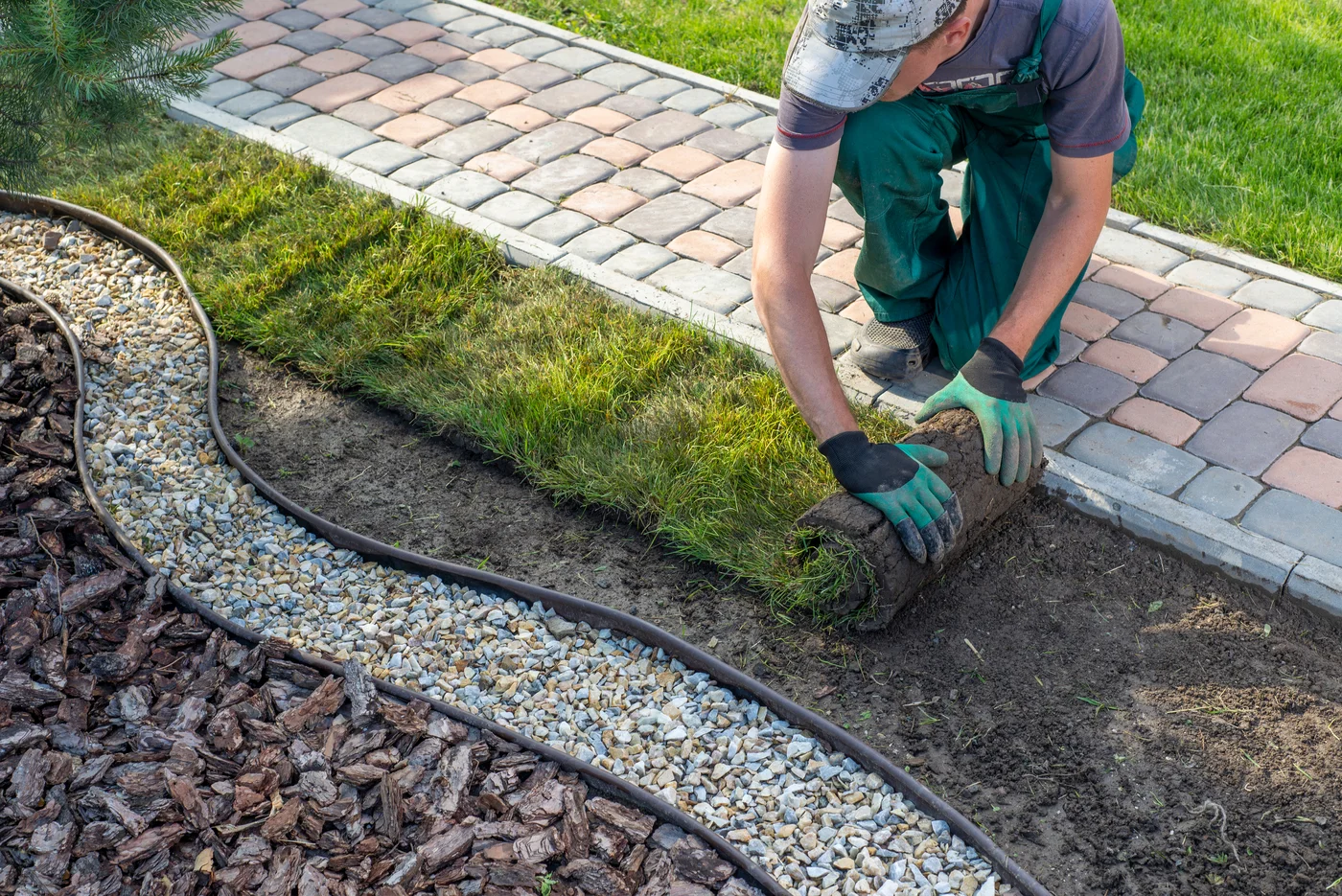
Install and Establish the New Lawn
Sod gives the property immediate coverage, but installation day is only the beginning of establishment. Placement, moisture, traffic, and the first rounds of normal maintenance all affect how the new lawn settles into the prepared area.
Keep Placement Tight and the Surface Consistent
Sod pieces should meet closely and sit evenly against the prepared surface rather than bridging over depressions or leaving avoidable gaps. We focus on consistent placement and clean fitting around the boundaries of the work area.
The visible seams are expected at first, but the installation should still read as one connected lawn. Changes in grade, edges around fixed features, and transitions to existing turf need attention while the material is being placed rather than after the entire area is covered.
Protect the Lawn During Early Establishment
New sod needs consistent moisture at the soil line while roots grow into the soil below. Weather, shade, wind, slope, rainfall, and sprinkler coverage can make one part of a lawn dry faster than another, so early watering should respond to the property rather than follow a rigid one-size-fits-all schedule.
Heavy traffic should also be limited while the turf is beginning to hold. The first mowing should wait until the sod is anchored enough to stay in place and the ground is firm enough for equipment. Once the lawn is established enough for normal cutting, our lawn mowing page explains recurring mowing considerations separately.
Why Choose Our Team for Sod Installation
We approach sod as part of the property rather than as a layer of grass placed over whatever is already there. We focus on property-specific planning, site preparation, visible water movement, clean transitions, and practical establishment expectations. When another issue needs attention first, we keep that scope separate instead of presenting sod as the solution to every lawn problem.
Homeowners can also review our location-specific service information in Bloomington, Normal, and Le Roy. The service area may be the same, but the amount of turf being replaced, access, grade, surrounding landscape, and establishment conditions still depend on the individual property.
Conclusion
A new lawn starts with deciding whether replacement is the right move and preparing the area so the sod has a sound place to establish. If you have bare ground, failed turf, or a lawn area that needs rebuilding, contact our team to discuss the property, the preparation it may need, and the right sod-installation scope.
FAQs
When Is Sod a Better Choice Than Trying to Improve Existing Turf?
Sod may make more sense when a large area has failed, soil is exposed, or the lawn is being rebuilt after other property work. If usable turf remains and the concern is primarily compaction or nutrient support, lawn care may be a better first step.
What Property Conditions Should Be Addressed Before Sod Is Installed?
Consider visible low spots, active runoff, erosion, major grade problems, and poor transitions to hard surfaces before covering the area. The right preparation depends on what is happening on the property and which related services are included in the confirmed scope.
What Should Homeowners Plan for After Sod Installation?
Plan for closer moisture monitoring and lighter traffic while the turf establishes. Watering should keep the soil-contact area from drying out without leaving the lawn saturated, and mowing should wait until the sod is anchored and the surface is firm enough for equipment.
Can Sod Be Installed in Only Part of a Lawn?
A focused replacement can be practical when the damaged area has a clear boundary and the surrounding turf is stable enough to remain. The transition, grade, shade, moisture, and how the new section will meet the existing lawn should all be considered before setting the final work area.