 (309) 275 2314
 info@jtslawncare.biz
Winter Lawn Maintenance For Spongy, Muddy Lawns After Thaw
Introduction: A lawn can look fine all winter, then a warmer week shows up, and suddenly it feels like a wet sponge underfoot. Some yards get muddy fast, and others feel soft in random spots, almost like the ground is floating. That can make homeowners worry they did something wrong, or that the grass is already ruined. The good news is that a thaw doesn’t automatically mean damage, but it does mean the yard needs a smarter approach for the next couple of weeks. Keep reading to see why it happens and what can be done to get the yard back on track.
Lawn Maintenance For Better Landscaping When The Ground Thaws
Landscaping Clues Hidden Under Thawing Soils?
When a lawn feels spongy after thawing, the problem usually starts below the grass. Frozen ground holds water in place; the top layer softens first, while the deeper layer remains cold. That creates a “wet cap” effect where water has nowhere to go, and each step pushes the surface down and back up. This is one of those moments where lawn maintenance matters more than people expect, because traffic and heavy tools can leave dents that stay all season. If the yard also has clay-heavy soil, the spongy feel may be more pronounced because clay retains water longer than sandy soil.
A homeowner can learn a lot just by watching where the mushy spots show up. Low areas near sidewalks, fence lines, and downspout exits often get the worst of it. Snow piles from shoveling can also keep one section wetter longer, even after the rest of the yard dries. If the yard is shaded by trees or the home’s north side, thawing can be uneven, resulting in a patchy lawn. A good landscaping layout helps water move away from the turf, but when grading is slightly off, thaw time makes the issue obvious.
Mulching And Snowmelt: Why Lawns Get Soggy Now
Mulching is usually a good practice, but winter timing can affect results. If chopped leaves are mulched into the lawn late in fall and the layer remains thick, moisture can remain near the surface during thaw periods. That does not mean mulching was “bad”; it simply means the yard may need additional drying time before it can handle foot traffic and wheelbarrows. In December, thaw days can come and go, and each warm-up can add more meltwater to the topsoil.
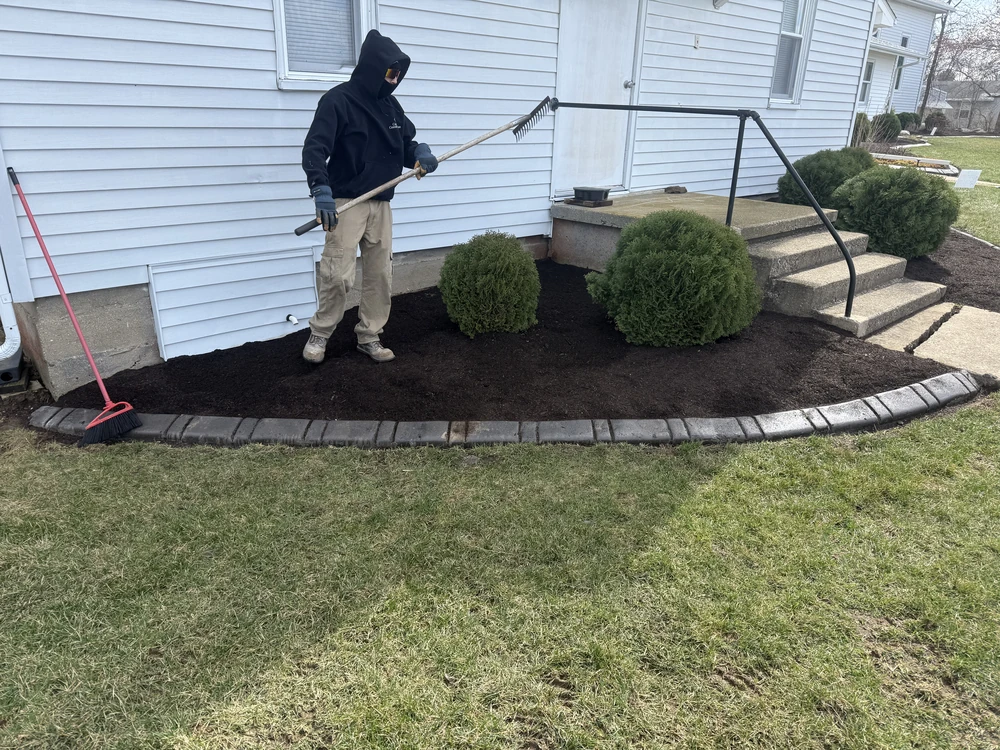
This is where lawn maintenance becomes more about restraint than work. If the ground is soft, it is usually best to avoid walking the same path repeatedly. If a homeowner is wondering what they can do, the simplest step is often to redirect traffic and give the turf time to dry. Mulch should stay in beds and around shrubs, not piled onto grass during thaw, because that extra cover can keep the soil wet longer.
Lawn Maintenance After Freeze-Thaw Cycles
Landscaping Mistakes Trapping Water In Winter
Freeze-thaw cycles can make a yard look messy even if the grass is healthy. One common issue is compaction from late-fall projects, delivery trucks, or repeated lawn mowing when the soil is already damp. Compacted soil drains slowly, so when it thaws, the surface becomes slick and soft rather than firm. Lawn maintenance during this window focuses primarily on protecting soil structure, as once ruts form, they trap more water.
A homeowner can do a simple check without turning the yard into a project site. If a screwdriver pushes into the ground easily and comes up coated in mud, the soil is still too wet for most work. If the top inch is mushy but the soil underneath is hard and cold, the lawn is thawing in layers, and that’s when footprints sink the deepest. Some landscaping features can also exacerbate the problem, such as downspouts that discharge water in the same spot or edging that traps runoff rather than guiding it away. In that case, lawn maintenance involves identifying where water is entering the turf and providing a better drainage path.
Mulching On Frozen Soil Creates Soggy Patches
Mulching mistakes in winter are usually accidental. Sometimes homeowners store extra mulch on the lawn “just for a few days,” but when the ground thaws, the pile begins to soak into the turf. At other times, leaf piles left after a final cleanup can decompose, creating a wet, airless patch beneath them. Mulching should be applied to garden beds, around trees, and in planting zones, not on top of grass when the soil is thawing.
Lawn maintenance also includes knowing what not to do: raking aggressively while the soil is soft can tear the grass out by the roots. It is usually better to wait for a few drier days, then do a light cleanup when the surface firms up. When mulching is done in the right places, it protects soil and reduces erosion, but during thaw weeks, it has to be used carefully.
Lawn Maintenance For Better Landscaping With Simple Drainage Help
Landscaping Drainage Checks Before Spring Hits
A spongy lawn after thawing is often the yard’s way of pointing to drainage needs. Sometimes the fix is small, such as extending a downspout to release water farther from the turf. Other times, it is about reshaping how water moves, especially if the lawn slopes toward the house or collects at the bottom of a hill. Lawn maintenance planning is easier when homeowners treat thaw season like a “reveal,” because it shows where water naturally gathers.
For yards that stay wet year after year, professional landscaping changes may be the most practical route. A shallow swale, a French drain, or a properly designed rain garden can redirect water without turning the yard into a construction zone. Topdressing and soil improvement can also help over time, especially if the yard has tight, heavy soil that drains slowly. The timing matters, though. Lawn maintenance work, such as aeration or soil mixing, should wait until the ground is no longer muddy and can support equipment without sinking.
Mulching To Protect Soil Without Making Muddy
Once the lawn begins to dry, mulching can help prevent soil from washing into the turf. Bare garden edges, new beds, and spots where runoff hits the ground can all turn into mud factories during the thaw. Mulching those zones with a clean layer helps keep soil where it belongs and reduces mess on the grass. The key is to keep mulch in the right areas and off the lawn. A neat edge between the bed and turf also prevents mulch from sliding onto the grass during heavy melt.
A good rule is to avoid pushing mulch into soggy lawn edges just to make the bed look finished. When the ground is soft, the pushed-out material blends with mud, making cleanup more difficult later. Lawn maintenance at this stage is about allowing the turf to firm up, then addressing repairs once conditions improve. Mulching can still be part of the plan; it just needs proper placement and timing.
Conclusion
Spongy or muddy turf after thawing is frustrating, but it is usually temporary. With proper lawn maintenance, the grass has a much better chance of surviving winter without serious damage. If the yard remains wet every thaw, or ruts keep forming regardless, we at JT’s Lawn Care & Landscaping can help identify the issue and recommend corrective measures. Reach out to schedule a visit, and we’ll help your lawn look and feel solid again.

"*" indicates required fields
★★★★★
Super personable, affordable, and attention to quality work. Thanks, JT’s!
- Amy Shreves
Young guys were friendly and did a great job for us. I would recommend their services to anyone needing landscaping or lawn care.
- Starkey Hedger
Scott was amazing! He was extremely helpful, kind, and professional. He walked us through every step of what needed to be done. He was very knowledgeable and went above and beyond. The crew came out and were fast, efficient, and very kind. We will continue to use them!
- Jennifer Garcia
These guys are awesome!
- Jared Hobson
We had the landscape curbing done around our pool and love it. Jake and his crew did a fantastic job.
-Traci Hartwig
SERVICES
Landscape Curbing
Landscaping
Pavers
Hardscaping
Retaining Walls
Patios
Sod Installation
Drainage
Retaining Walls
Softscape
Lawn Fertilization
Aeration
Landscape Installation
Mulching
Outdoor Living Spaces
Snow Removal
French Drains
Land clearing
Fall cleanup
Grading
Resloping
Planting
Tree Trimming
Tree Pruning
Erosion Control
Firepit Features
SERVICE AREAS
Bloomington, IL
Normal, IL
Le Roy, IL
Peoria, IL
Downs, IL
Mahomet, IL
Champaign, IL
Fisher, IL
Urbana, IL
Clinton, IL
Gibson City, IL
Maroa, IL
Monticello, IL
Forsyth, IL
Rantoul, IL
Savoy, IL
Lincoln, IL
Decatur, IL
Pontiac, IL
Morton, IL
