 (309) 275 2314
 info@jtslawncare.biz
Lawn Mowing in Bloomington, Normal & Le Roy, IL
SUMMARY
At JT’s Lawn Care & Landscaping LLC, we provide lawn mowing that helps keep grass manageable and the property looking consistently cared for. We plan the service around current growth, access, obstacles, soft areas, and changing lawn conditions through the season. The goal is a straightforward mowing routine that keeps the yard from repeatedly getting ahead of you.
Lawn Mowing That Fits the Way Your Property Grows
A lawn does not grow at the same pace all season. Rain, heat, shade, traffic, and turf condition can change when another cut makes sense. We keep the mowing plan tied to what is happening on the property rather than treating the calendar as the only factor.
Set a Practical Mowing Rhythm
Recurring mowing helps prevent the lawn from cycling between overgrown and freshly cut. When grass gets too far ahead, the next visit may have to remove more growth at once, and the finished appearance can be rougher. A steadier rhythm keeps growth more manageable and the property more consistent between visits.
The right interval depends on how quickly the lawn is growing. Faster periods may call for closer attention, while slower growth can change the schedule. We confirm the mowing scope around the property rather than publishing one frequency as the answer for every yard.
Avoid Forcing a Cut When Conditions Are Too Soft
Wet or soft ground can make mower traffic more likely to leave tracks, disturb thin areas, or create a mess near low spots. After rain, both grass height and surface firmness matter.
One part of a yard can also stay softer than another. A low area, shaded side yard, or section near a downspout may need different judgment from an open section that has already firmed up.
Plan the Mow Around the Property, Not Just the Grass
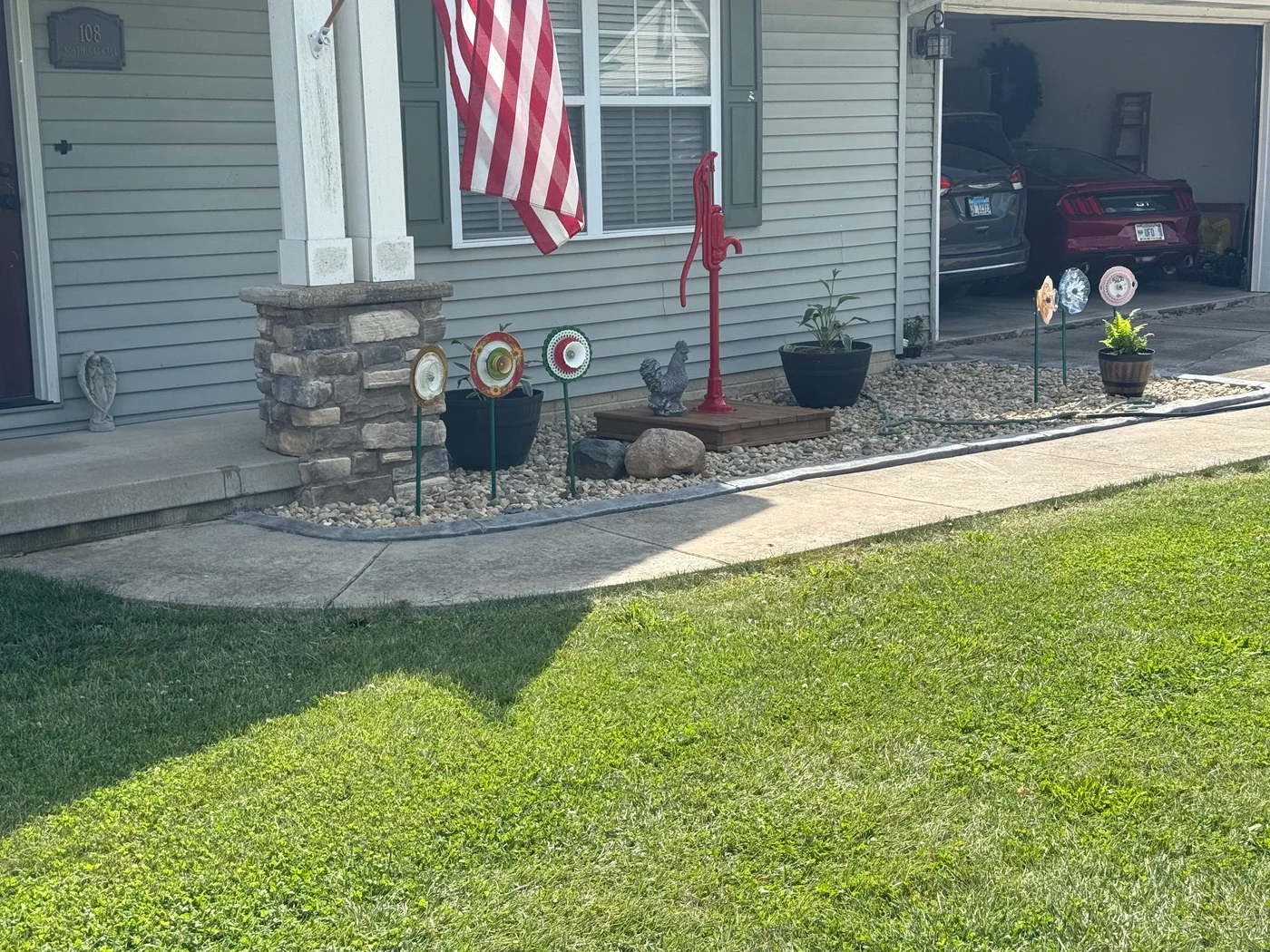
Planting beds, trees, fences, gates, walks, driveways, slopes, and separate lawn sections can affect how mowing moves through a property. Accounting for those fixed conditions helps keep the service practical.
Account for Access, Obstacles, and Different Lawn Areas
Before service begins, it helps to identify gates, narrow passages, fixed obstacles, low areas, and anything that needs extra clearance. A wide front lawn may be easy to reach, while a fenced backyard or side strip may require a different route.
We also consider differences within the lawn. Shade, slope, traffic, and surface firmness can vary across one property, so the yard should not be treated like one uniform rectangle.
Keep the Cut Proportional to Current Growth
Mowing should reduce grass height without turning every visit into an aggressive reset. If the lawn has grown longer than expected, consider how much you remove and the turf’s condition. Taking off too much at once can leave the yard looking uneven and add stress to grass already dealing with heat, dryness, or another site condition.
The lawn also needs to look good beside driveways, walks, planting beds, and other outdoor features. Mowing is focused on the grass, but the finished result is still part of the whole property.
Know What Mowing Can (and Cannot) Solve
Lawn mowing supports appearance and routine upkeep, but it doesn’t cure every turf problem. A regularly cut lawn can still have thin growth, compacted soil, bare areas, nutrient needs, or drainage concerns.
Separate Appearance From Turf-Health Needs
Mowing controls grass height and helps keep the property orderly. It does not replace services intended to support turf health. If the lawn needs fertilization or aeration, our lawn care services address those needs separately. If you are considering a broader recurring property-care scope, our lawn maintenance page explains that service on its own.
Keeping those scopes separate makes it easier to match the service to the problem. Long grass calls for mowing. Persistent thinning, compaction, or bare areas may require a different next step.
Coordinate Mowing With Other Confirmed Lawn Services
Some properties need more than one lawn service during the year. Fertilization, aeration, or sod installation may be appropriate as separate needs within our confirmed scope. When those services affect the same lawn, their timing should make sense together rather than being treated as unrelated work.
Homeowners can also review our location-specific information for Bloomington, Normal, and Le Roy. This page stays focused on mowing, while those city pages provide broader context about the outdoor services we offer in each priority area.
Why Choose Our Team for Lawn Mowing
We approach lawn mowing with property-specific recommendations, a clear scope, practical scheduling, and attention to the property’s conditions. We consider growth, access, soft areas, and how the lawn fits with the rest of the yard.
The objective is straightforward: keep the grass manageable and the property presentable without pretending mowing can solve every turf or site issue. When another confirmed service is the better fit, we keep that distinction clear.
Conclusion
If mowing keeps slipping behind the rest of your week or the lawn repeatedly gets taller than you want between cuts, a consistent service plan can make the property easier to keep up with. Contact our team to discuss the lawn, access, current growth, and a mowing schedule that makes sense for your property.
FAQs
How Often Should Lawn Mowing Be Scheduled?
The right frequency depends on growth, season, and lawn condition. Faster growth may require shorter intervals, while slower periods may allow more time between cuts. We confirm the schedule around the property instead of assuming one frequency fits every yard.
What Happens When the Lawn Is Too Wet to Mow Cleanly?
Very soft or saturated ground can increase the chance of ruts, muddy tracks, or damage in thin areas. If conditions are not suitable for a clean result, timing may need to shift. Low spots and shaded areas can also stay softer after rain.
What Should I Check Before Lawn Mowing Service Begins?
Make sure the mowing areas are accessible, and point out gates, narrow passages, low spots, hidden obstacles, or other conditions that could affect the route. Clear expectations at the beginning help keep recurring service straightforward.
What If My Lawn Has Thin or Bare Areas Even Though It Is Mowed Regularly?
Mowing alone may not address the underlying issue. Compaction, nutrient needs, drainage, or damaged turf can all contribute to thin areas. Depending on the property, you may need to consider lawn care, aeration, fertilization, drainage work, or sod separately.

"*" indicates required fields
★★★★★
Super personable, affordable, and attention to quality work. Thanks, JT’s!
- Amy Shreves
Young guys were friendly and did a great job for us. I would recommend their services to anyone needing landscaping or lawn care.
- Starkey Hedger
Scott was amazing! He was extremely helpful, kind, and professional. He walked us through every step of what needed to be done. He was very knowledgeable and went above and beyond. The crew came out and were fast, efficient, and very kind. We will continue to use them!
- Jennifer Garcia
These guys are awesome!
- Jared Hobson
We had the landscape curbing done around our pool and love it. Jake and his crew did a fantastic job.
-Traci Hartwig
SERVICES
Landscape Curbing
Landscaping
Pavers
Hardscaping
Retaining Walls
Patios
Sod Installation
Drainage
Retaining Walls
Softscape
Lawn Fertilization
Aeration
Landscape Installation
Mulching
Outdoor Living Spaces
Snow Removal
French Drains
Land clearing
Fall cleanup
Grading
Resloping
Planting
Tree Trimming
Tree Pruning
Erosion Control
Firepit Features
SERVICE AREAS
Bloomington, IL
Normal, IL
Le Roy, IL
Peoria, IL
Downs, IL
Mahomet, IL
Champaign, IL
Fisher, IL
Urbana, IL
Clinton, IL
Gibson City, IL
Maroa, IL
Monticello, IL
Forsyth, IL
Rantoul, IL
Savoy, IL
Lincoln, IL
Decatur, IL
Pontiac, IL
Morton, IL
