(309) 275 2314
 info@jtslawncare.biz

Spring shows everything. Beds that looked fine in winter suddenly spill mulch after a heavy rain, grass starts sneaking into the flowers, and the edge line looks fuzzy from the street. In Bloomington, IL, that’s pretty common in April because the ground is waking up and the yard is getting used again. This blog breaks down how to tell whether landscape curbing is the right fix, or if simple edging will handle the job, so keep reading.
Landscape Curbing Basics for Clean April Beds
Hardscaping Spots That Need Strong Borders
When a yard has a slope, a downspout that dumps water near a bed, or a corner that always turns muddy, the border takes a beating. In those spots, landscape curbing can serve as a small barrier that helps hold soil and mulch in place. That matters in April because freeze-thaw cycles can leave the ground soft, and spring storms can move material quickly. A homeowner might notice mulch drifting onto the sidewalk, dirt washing toward the driveway, or a bed line that changes shape after every storm. If those issues keep repeating, the yard is asking for something stronger than a cut edge.
Landscape curbing also makes sense when the bed abuts firm surfaces, such as a walkway, patio, or driveway apron. Hardscaping already has clean lines, so a flimsy border next to it often looks unfinished. A poured curb creates a consistent edge that can match the home’s style, whether it’s a smooth modern look or a textured finish that fits older brick. It can also reduce damage from foot traffic because people see the edge and step around it. Over time, that can protect plant roots and keep the bed from spreading into places it shouldn’t.
Landscaping Areas Where Simple Edging Wins
Not every bed needs a permanent border, and that’s where simple edging shines. If a homeowner likes changing annuals every year, adjusting bed shapes, or expanding planting space, a spade-cut edge can be easier to live with. The line still looks sharp when it’s freshly done, and it blends well with softer landscaping styles. In spring, a crisp edge can make last year’s beds look brand new, even before flowers fill in. For homeowners who enjoy weekend yard work, edging can be a satisfying project that costs much less than installation.
Edging also works well when the main problem is grass creep instead of washout. Cool-season turf in Central Illinois can spread fast once it warms up, so a maintained edge keeps grass out of the mulch. Some homeowners use metal or composite edging to give the line more structure while staying flexible. Others keep it simple, refreshing the cut edge a few times during the growing season. If the bed is flat, drainage is decent, and the border just needs definition, it can be smarter to skip landscape curbing and invest in plants, soil improvement, or other landscaping updates.
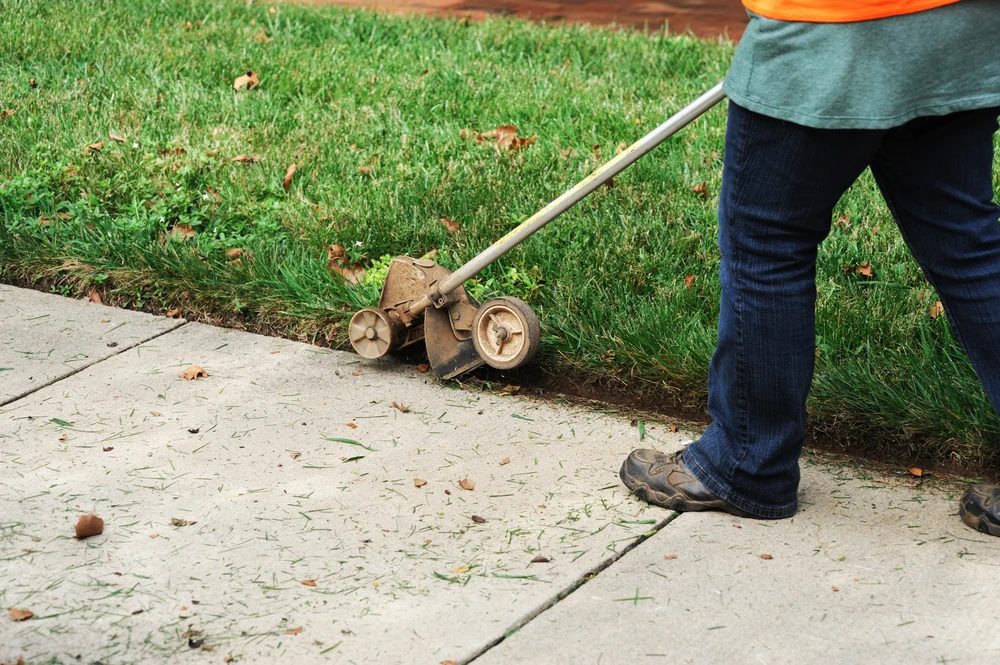
Your Lawn Line Can Help decide Between Landscape Curbing and Edging
Hardscaping Edges Near Patios And Walks
Borders around patios and walkways get tested differently. Mower wheels can bump the edge, trimmers can nick stone, and soil can spill onto pavers if the bed sits higher than the surface. During lawn-mowing season, a messy edge makes a simple job take longer because the mower cannot maintain a clean track. That’s often when homeowners start wishing for landscape curbing, especially if they want a border that guides the mower and reduces trimming. A good curb line can also help keep gravel, soil, and mulch from creeping across a walkway after rain.
This is also where the yard’s everyday use matters. If kids cut across the lawn to the patio, or guests walk the same route to the back door, those corners get worn down. In Le Roy, IL, many yards have a mix of open lawn and smaller planting beds, and the tight spaces around a patio can feel cramped if the border isn’t clear. A curb provides a visible boundary, helping beds keep their shape even when the area gets heavy use. It also helps prevent bed material from scattering onto hard surfaces that can stain or look messy. For homeowners who want a clean street appearance and a yard that feels easier to maintain, this is one of the strongest arguments for landscape curbing.
Landscaping Upkeep That Cuts Trimmer Time
A yard can also tell its story through the edge line itself. If the border keeps disappearing, grass keeps sneaking into the bed, and weeds take advantage of that fuzzy transition, the maintenance load climbs fast. Landscaping looks best when the bed line is easy to see, because the eye reads it as tidy even if plants are still filling in. Simple edging can fix that, but only if someone is ready to refresh it. If a homeowner hates edging day, or never seems to get to it, the bed line becomes an ongoing frustration instead of a quick touch-up.
The tricky part is that April growth can fool people. Early in the month, a cut edge looks sharp, then a few warm days hit, and grass starts spreading again. That doesn’t mean landscape curbing is always required, but it does mean the homeowner should be honest about how they use their time. Some people enjoy the routine of keeping an edge crisp, while others want a border that holds its shape without frequent attention. In Bloomington, IL, spring schedules can be packed with sports, work, and family commitments, so a long-lasting border often feels like a relief. In those cases, landscape curbing can reduce the amount of trimming and reshaping needed as the season moves forward.
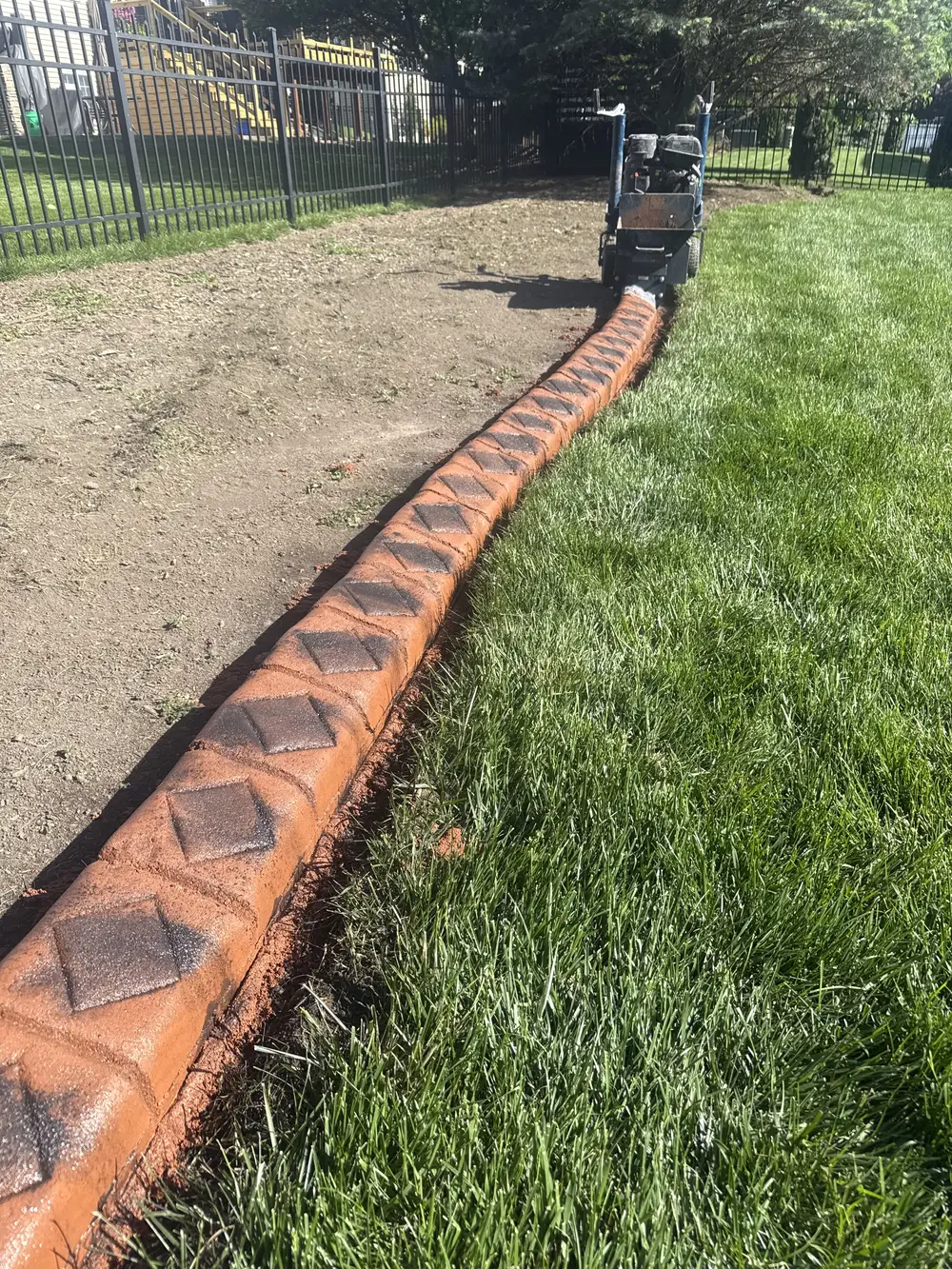
Deciding on Landscape Curbing for Summer Success
Hardscaping Details That Add Real Value
The best choice usually comes down to what the homeowner wants the yard to do. If the goal is a polished look that stays consistent year after year, a curb is often worth considering. It is part of hardscaping, but it affects daily maintenance in a very real way, especially around driveways, sidewalks, and tighter bed corners. A curb can also protect against the slow creep of soil and mulch that happens after storms and foot traffic. When the border is stable, the rest of the yard is easier to keep looking cared for. For homeowners thinking about resale or long-term improvements, those small details can make the yard feel finished.
A homeowner should also think about installation quality, because a curb that cracks or heaves is not a win. Central Illinois weather can be rough on anything installed too shallow or without proper base prep. That’s why the contractor matters, along with proper grading and drainage awareness. If a yard already has stone borders, paver paths, or a patio, a curb can tie those features together, making the whole layout look planned rather than pieced together. When done right, it’s not just a border, it’s a frame that supports the rest of the outdoor space.
Landscaping Finish That Keeps Mulch In Place
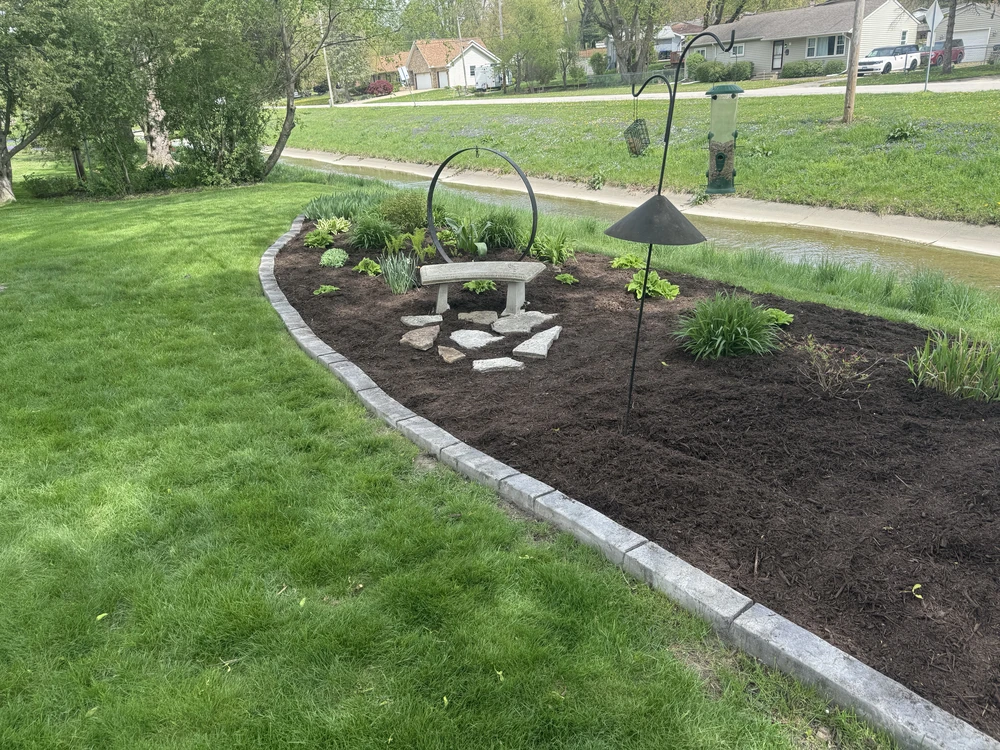
There’s also a practical side that homeowners feel right away. When a border holds, mulch stays in the bed instead of ending up on the lawn or stuck to the sidewalk. That keeps plants cleaner, helps soil moisture stay more even, and makes the yard look cared for between visits. For many homes in Bloomington, IL, spring rains can be heavy enough to push mulch downhill, especially in beds that sit above grade. A border that holds the line helps prevent that seasonal mess from becoming a monthly chore.
At the same time, simple edging should not be dismissed, because it fits the right yard and the right homeowner. In Le Roy, IL, some properties have larger open spaces where a simple, well-cut edge looks natural and fits the landscape. It can also be the better choice when the bed design is still evolving, and the homeowner expects changes over the next couple of years. If the bed stays neat with basic upkeep and the edge holds after storms, then edging is doing its job. But if the same problems keep coming back, that’s usually when homeowners decide landscape curbing is the upgrade that finally makes the yard feel easier to maintain.
Conclusion
Now that the difference is clearer, the next step is deciding what kind of yard life a homeowner wants this season. Some homes do great with simple edging and a little regular upkeep, while others benefit more from landscape curbing that keeps borders clean even when spring weather gets messy. We at JT's Lawn Care & Landscaping LLC help families choose what fits their property, their budget, and how they actually use their outdoor space. Reach out today, and we’ll help shape a clean border plan that makes the whole yard feel more put-together.